
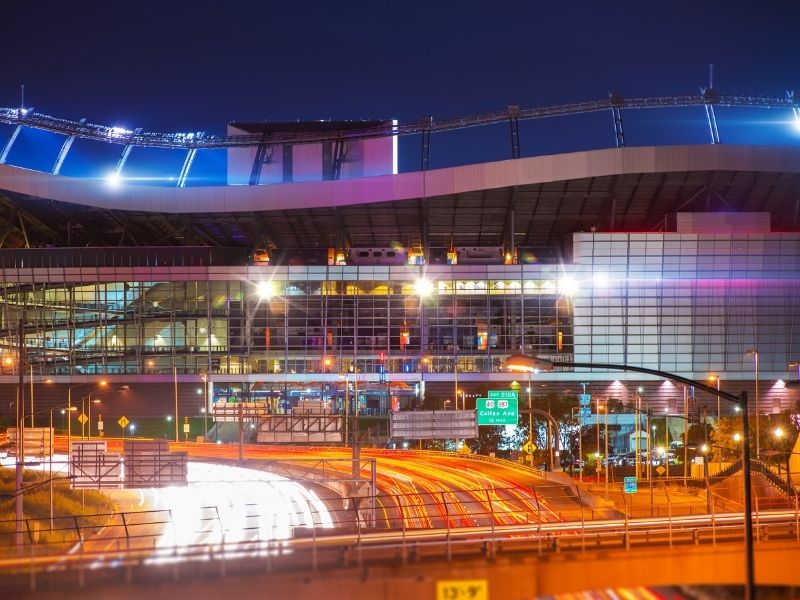
The final whistle blows, and within twenty minutes thousands of cars try to leave through the same few driveways. Arrivals spread out over an hour or two, but departures hit all at once, and that sudden surge is what tests a venue’s site design. Long exit times frustrate guests, block neighborhood streets, and can slow emergency response. A traffic engineer brought in during planning can shape parking, exits, and road improvements so the crowd clears safely and in a reasonable amount of time.
How Traffic Engineers Estimate Event Departure Volumes
Departure planning starts with a realistic estimate of how many vehicles will leave and how fast. A traffic engineer usually begins with venue capacity, expected attendance, and the share of guests arriving by car. Vehicle occupancy matters a lot, since event traffic often carries more people per car than daily commuter traffic. Rideshare, shuttles, transit, and walking trips all reduce the number of vehicles in the parking lots.
Timing is the next piece. Most guests leave within a short window after the event ends, though some leave early and others linger. Engineers often build a departure curve showing how many vehicles exit in each 15-minute period. That peak period, not the daily total, drives the design of exits and nearby intersections.
Good data improves every estimate. A traffic study using counts from similar venues, past events at the same site, and local traffic data helps ground the assumptions. For new venues, engineers may test several scenarios, including a sold-out event and a weekday event that overlaps with evening rush hour.
Evaluating Road Capacity and Traffic Flow Near Event Venues
Road capacity is the number of vehicles a lane or intersection can move in a given time. Even a well-designed parking lot can’t empty faster than the surrounding streets can absorb the traffic. A traffic engineer studies the roads, turn lanes, and intersections between the venue and the main highways. The goal is to find the true bottleneck, which is often a single intersection or merge point.
Capacity depends on many factors. Lane count, signal timing, turning movements, pedestrian crossings, grades, and background traffic all play a part. Analysis methods from accepted traffic engineering references help estimate how each location will perform under event loads. Results are often reported as level of service, a letter grade that describes delay at an intersection.
The study should also look at who else uses the roads. Residential streets, school zones, hospitals, and fire stations near the venue may need protection from overflow traffic. If the network can’t handle the peak, the solution might include road widening, new turn lanes, extra site driveways, or operational plans that spread departures across more routes.
Designing Parking Lot Exits and Vehicle Circulation Routes
Parking lot design has a big effect on departure time. The number of exit driveways, how many lanes each one has, and where they connect to public streets all set the pace. A lot with plenty of spaces but only one exit lane will empty slowly no matter how well the rest is designed. Engineers try to match exit capacity to the expected peak flow.
Internal circulation matters just as much. Drive aisles should lead traffic toward exits in a clear, predictable pattern. Dead ends, sharp turns, and conflicts between pedestrians and cars all slow things down. Separating rideshare pickup, buses, and accessible parking from general traffic keeps those areas from clogging the main routes.
- Driveway throat length, which gives exiting cars room to queue before the street.
- Pavement design and grades at exits, since steep or uneven approaches slow vehicles.
- Drainage at driveways, because ponding water can force drivers to slow or swerve.
- Pedestrian routes that cross drive aisles at marked, well-lit locations.
These details come from site planning and civil engineering design. Getting them right early is far cheaper than rebuilding exits after opening day.
Managing Traffic Signals and Intersection Congestion After Events
Traffic signals can either help or hurt a venue departure. Normal timing plans are built for everyday traffic patterns, which don’t match a sudden outbound surge. Many agencies use special event timing plans that give more green time to the venue exits and the main outbound routes. These plans are usually developed and approved by the agency that operates the signals.
Coordination between nearby signals helps platoons of cars move through several intersections without stopping. A traffic engineer can model how changes at one intersection affect the next. Without that coordination, a fix at the exit can simply push the queue to the next light down the road.
Some events also use manual control. Police or trained traffic personnel may direct intersections during the peak to respond to real conditions. That approach takes planning, staffing, and clear communication with the signal operator so manual and automated controls don’t work against each other.
Coordinating Traffic Control Plans for Safe Venue Departures
A traffic control plan describes how vehicles and pedestrians will be guided before, during, and after an event. It may include lane closures, temporary one-way routes, cones, barricades, portable message signs, and staffing locations. In the U.S., traffic control devices generally need to follow the Manual on Uniform Traffic Control Devices and any state or local requirements. The plan usually needs review by the city, county, or state agency that controls the roads.
Coordination is the hardest part. Venue operators, police, transportation agencies, transit providers, and emergency services all have a role. A clear plan names who controls each location, how radios or phones connect the team, and how emergency vehicles will reach the site during the surge. Pedestrian safety should be part of every decision, since departing crowds often spill into the street.
The plan should improve with experience. Reviewing exit times, queue lengths, and incidents after each event shows what worked and what didn’t. Small changes to signage, staffing, or signal timing can make a big difference over a season.
Frequently Asked Questions
What does a traffic engineer do for an event venue?
A traffic engineer studies how vehicles and pedestrians will arrive and leave. They estimate traffic volumes, analyze nearby roads, and recommend site and roadway improvements. They may also help prepare traffic control plans and signal timing changes. Their work supports permitting and day-to-day event operations.
How long should it take to empty an event parking lot?
There isn’t a single standard time that applies to every venue. Exit time depends on attendance, parking layout, exit capacity, and road conditions. Many owners set their own goals based on guest experience and agency input. A traffic study can estimate realistic clearance times for a specific site.
Is a traffic impact study required for a new venue?
Many jurisdictions require a traffic impact study for large developments, including event venues. The thresholds and scope vary by agency. Some studies must include special event conditions in addition to normal weekday traffic. Check with the local transportation agency early in site planning.
